Like

Showing posts with label Spanish Food. Show all posts

Wednesday, November 30, 2011

Barcelona and Sitges

The last leg of our Spain trip was supposed to be 5 days in Barcelona. Having spent a full week relaxing in laid-back San Sebastian, however, we could not get into the rhythm of touristy Barcelona. We found some refuge in La Barceloneta and had a couple of good meals (descriptions to follow), but quickly escaped to the beaches of Sitges for the last few days. Sitges had the progressiveness of Barcelona and the bucolic atmosphere of San Sebastian. We would have sent for our things and stayed if we weren't trying to open a restaurant back in Los Angeles!

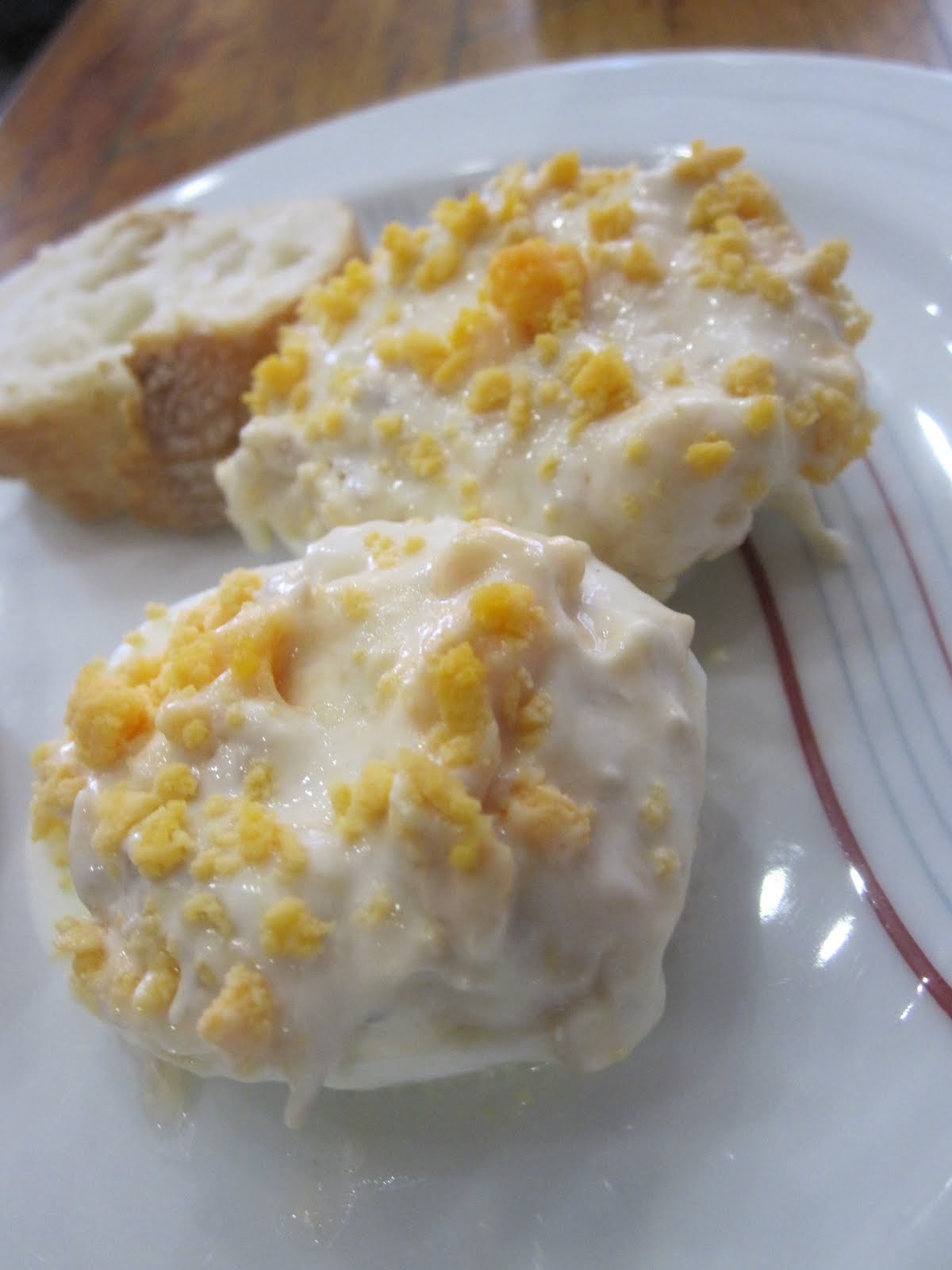
At a lively locals' bar in La Barceloneta, I think we impressed the bartender by our selection of hearty tapas for breakfast. Deviled eggs with a creamy, fishy filling, anchovies with potatoes, pan con tomate, and marinated white anchovies with a spicy vinegar sauce. We also had tortilla de patatas, but failed to take a photo. Oh and cafe con leche, 2 each, which meant we especially enjoyed our breakfast!

Lunch was just as seafood heavy as breakfast. Fideo with shellfish, hake stewed with a briney tomato and almond sauce (broth?). We really enjoyed both dishes, especially the hake because the broth tasted so robust and relatively complex and the fish was cooked nicely. The fideo had a perfectly crispy crust. We washed it all down with a crisp (unoaked) local Chardonnay from Alella.


We were somewhat surprised to find as good food as we found in Sitges. Prices were reasonable and the selection was abundant. At one of the more upscale restaurants we chose we finally had beans! I couldn't tell if beans were more traditionally made at home (chicken soup and salads were also things we decided were made in homes rather than in restaurants) or if we just didn't gravitate towards dishes that involved beans. The white beans we had on our skate dish were dense and flavorful, and have inspired me to make beans several times since. A lovely touch was a complimentary thimbleful of sherry at the end of our meal.

Tuesday, November 1, 2011

San Sebastian, Part II

Given that TM and I spent as much time in our pension's kitchen as we did in the San Sebastian pintxo bars, I thought I would devote the next part of our San Sebastian chronicle to the local farmers' markets, fish markets, bakeries, and supermarkets. First off, I have to say how amazing it was to see real food everywhere. We were hard pressed to find processed junk food and even harder pressed to find fast food restaurants (we came across one, fittingly an American institution). Getting a quick bite never meant compromising nutrition, or money for that matter. You just ducked into the nearest bar for a freshly-prepared snack, spent a few euros, and went on your way in a matter of minutes.

A daily pleasure for us was to partake in the 1 euro baguette tradition. In the mornings, you'd find old men walking with just-baked baguettes tucked under their arms. In the afternoons, teenagers heading home would have baguettes sticking out of their schoolbags. Inevitably, the tops would be missing from them. We found the crumb of the Spanish baguette to be more airy than their French counterpart. The flavor was subtle, the crust was crisp, and they were always only 1 euro.


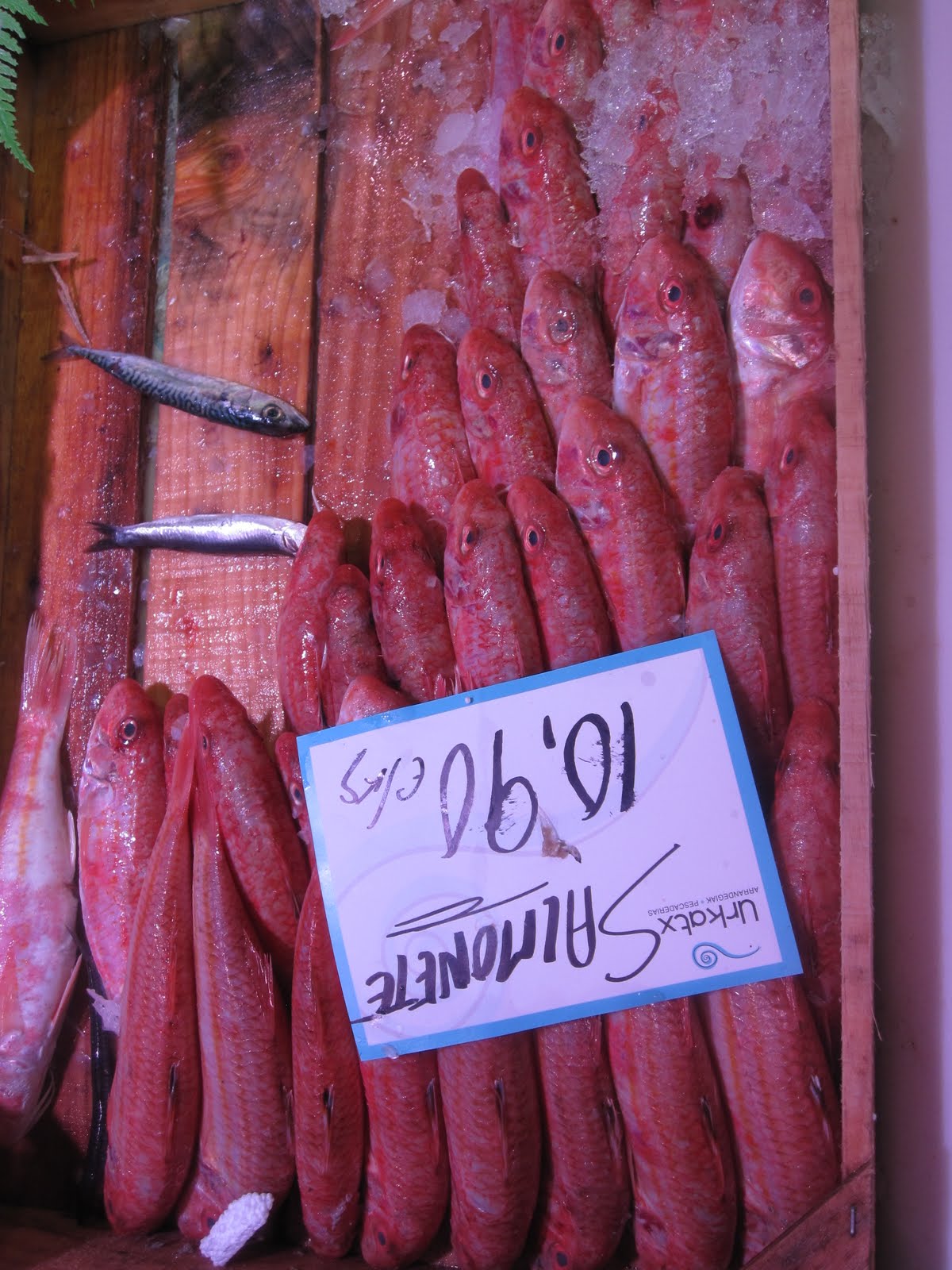
Another tradition I found fascinating were the fish markets. These markets did brisk business in the mornings, when the catch was super fresh and plentiful: salmonete (red mullet), squid, anchovies, and a variety of shrimp. I'm pretty sure very little was kept to sell the next day. I wish we had cooking apparatus at the pension so that I could have experimented with some of the wonderful seafood. TM had to convince me not to attempt cooking fish in the microwave oven.


We didn't find many supermarkets in San Sebastian, maybe a couple in Gros and one in the Commercial district. Instead we found specialty vendors aplenty, i.e. produce vendors, meat vendors and cheese vendors, wine shops, and bakers. Since many of the produce vendors had super fresh stuff, it was a pretty big surprise to come across the weekly farmers' market. Maybe it was a chance for the farmers (or rather, their wives) to one-up each other in person. Whatever the impetus, it was glorious to see the vegetal bounty of this green region.


At one of the markets we did come across, we found an interesting selection of prepared foods. Look at this beautiful spinach, red pepper, and goat cheese terrine! Or at the variety of ready-to-fry croquettes and fritters!


While in Spain, we ate as the Spanish ate, and drank as they drank (or at least tried to). When choosing wines, Lesley stuck with txacoli at every pintxo bar, TM and I would opt for a rioja red. We found this yummy crianza at a little wine shop in Gros. We remembered the wine key, but forgot the glasses. Not a problem!


Friday, October 28, 2011

San Sebastian, Part I

Oh, where do I begin? San Sebastian is something else: cute and quaint w/ well-preserved historic architecture, beautiful urban beaches, tight-knit and family-oriented communities, and most importantly great food. This was the best part of our trip in terms of food. We ate at 2 three-Michelin starred restaurants Arzak and Martin Berasetegui (thanks, Lesley!), countless pintxo bars, out of our pension's microwave oven, and (do I dare admit) one Chinese restaurant. Since the Arzak and Martin Berasetegui meals warrant their own postings, I'll stick to a few pintxo bar reviews for Part 1.

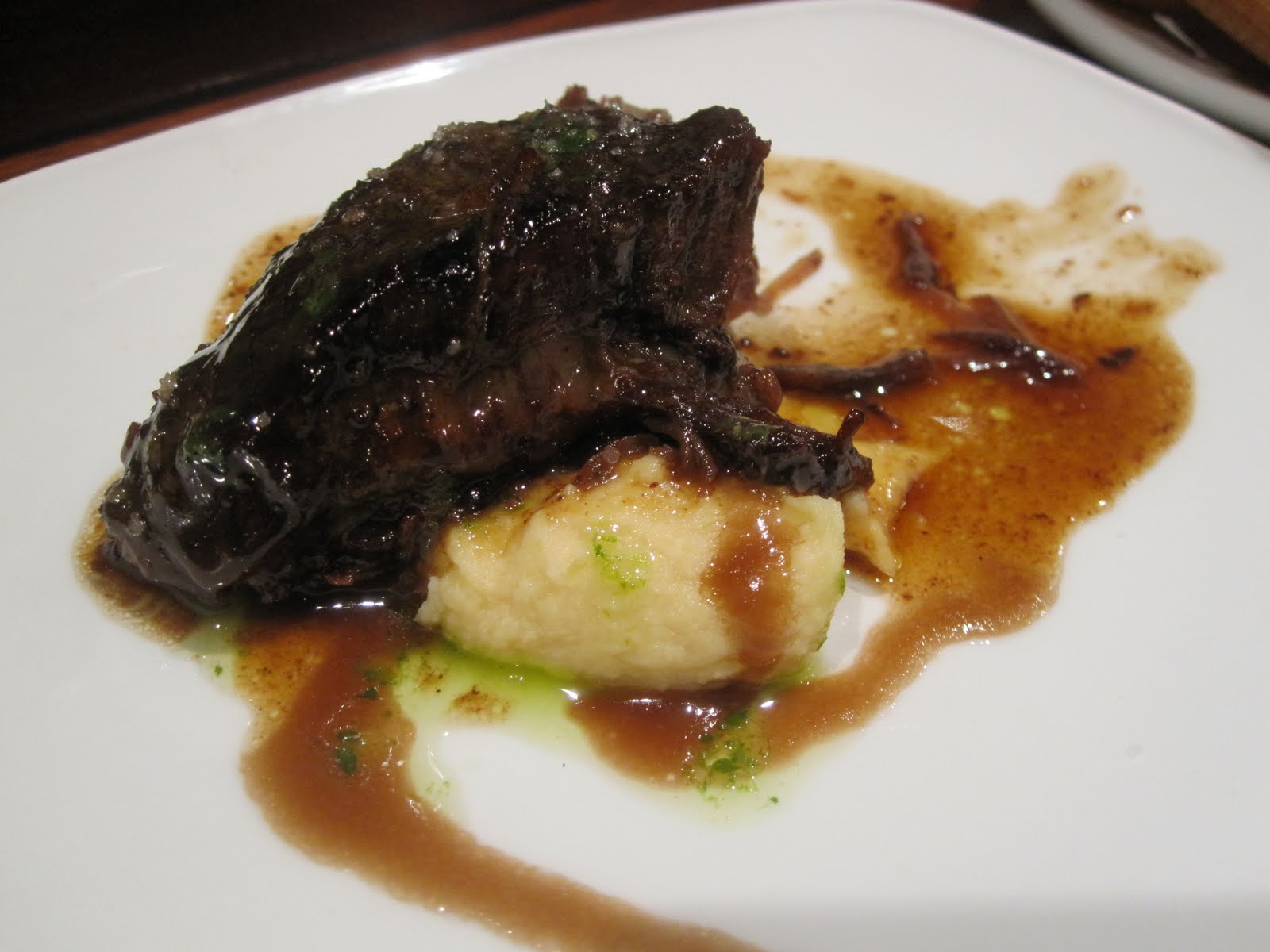
The first time I was in San Sebastian my traveling buddy learned of a locals' favorite, La Cuchara de San Telmo. I remembered the food to be amazing, and wanted to share the experience with my new traveling buddies. We went there first on our pintxo crawl. Bacalao with polenta and salsa verde, orzo risotto with a sharp cheese, pulpo a la plancha with braised cabbage, braised beef cheek over potato, cochinillo asado with apple puree and chimichurri. The compositions were not terribly spectacular or inventive, but the cookery was sublime. Every protein was melt-in-your-mouth tender, well-seasoned, and flavorful. TM's only complaint was that the cochinillo had rubbery skin (read: not as crisp as she's able to make it). But did I mention that every dish was 3-4 euro each?


Our next stop was a A Fuego Negro, a bar well-known for somewhat experimental cuisine. It was an extremely busy Saturday night, so we ordered what was quick and easy for the kitchen (an incidentally, what was advertised on the servers' shirts): kobe beef sliders. The sliders came out raw. Lesley and TM wolfed theirs down, but I couldn't stomach the texture of the mushy, room-temp manipulated meat. The pinxtos on the bar looked okay, but we moved on to a couple of other places including La Vina and La Cepa. Sorry, I was too drunk on rioja and estrella damm at this point to remember to take pictures of these last two!


Over the course of the next few days, we hit on a bunch more pintxo bars. We would start with one or two selections, stay if we liked them, move on if we didn't. Overall, our favorites were Astelena, Bar Goiz Argi, and Bar Nestor.


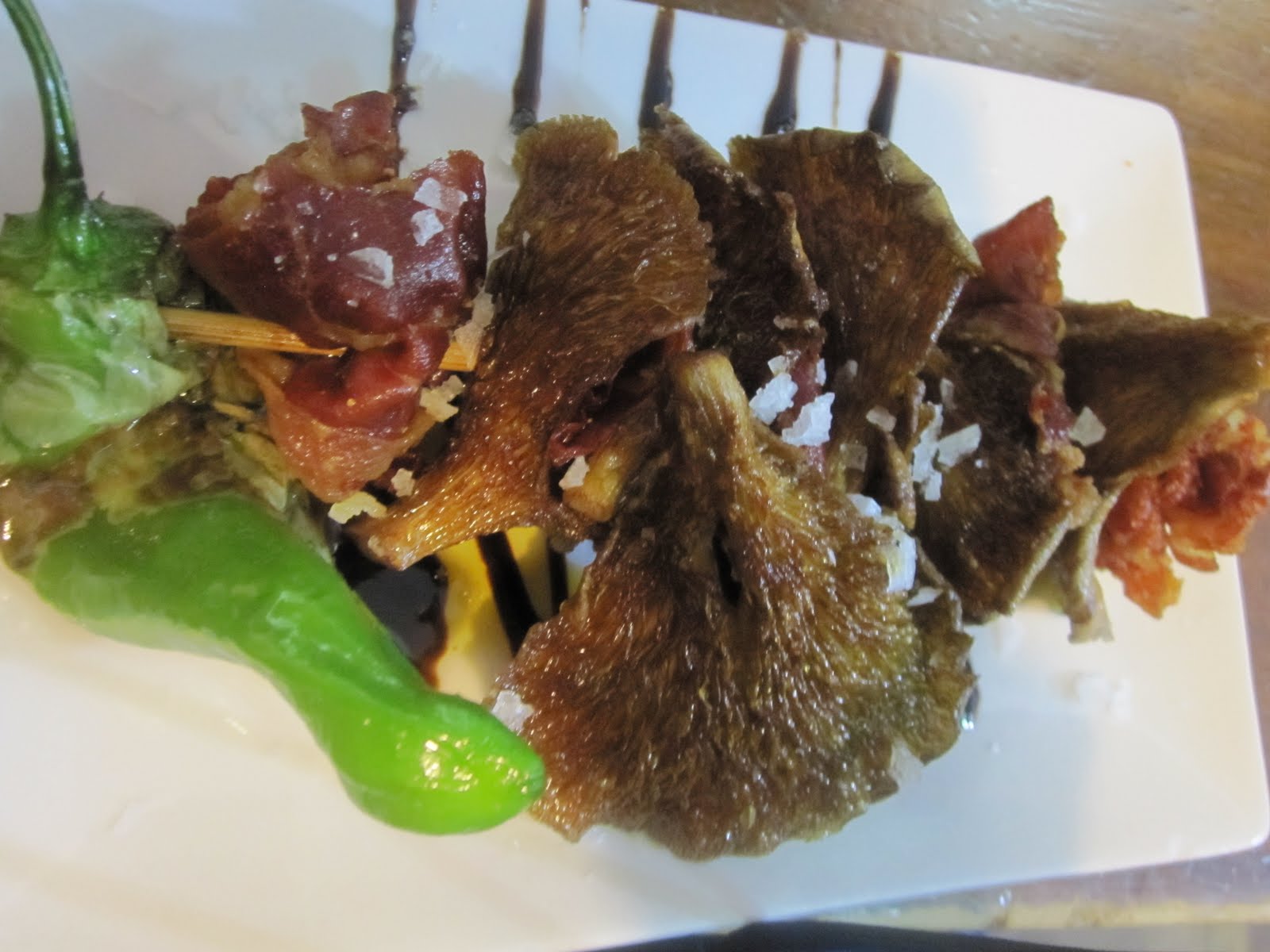
Astelena was interesting because they would display raw ingredients on their pintxo bar, and then take it back to cook when ordered. Were they concerned that people wouldn't order their raciones?? We choose the shrimp and filo, mushrooms w/ jamon and peppers, duck w/ star fruit and currants, and frog legs w/ crema and avocado. Every item was deep fried (perhaps too long) and hence one-note, except for the duck, which was pan-fried.


Bar Goiz Argi was chaos. Small, crowded, too uncomfortably busy to have any kind of serious enjoyment in the experience. Nonetheless, we ordered a handful of things: bacalao in a red pepper sauce, skewered pork, white anchovy with pickled peppers, and calamare a la plancha (not pictured). A bit salty overall, but solid bar food.

We chose Bar Nestor by accident; Bar Zeruko, our original choice, was closed. I remembered the name from someone's recommendation, and when we walked in and saw people hunched over thick, sultry slabs of rib eye steak we knew what we were eating for lunch. The barman showed us two raw steaks to choose from, and we were on our way to complete bliss (and later, heart burn in TM's case). The meat was from the most flavorful, happy animal we had ever encountered. Cooked to a perfect medium-rare, the steak oozed gameyness and matched perfectly with raw tomatoes doused in grassy olive oil and flaked sea salt.

Thursday, October 27, 2011

Madrid!

It has been awhile since we've blogged. Before we get any grief, I'm just going to say a lot has happened and we will share details all in good time! In the meantime, some notes about our recent trip to Spain starting with Madrid...

Getting up at 4am to catch a FlyAway shuttle to LAX so we could catch our 7am flight to Miami, and then a 3 hour layover in the airport followed by a 8.5 hr red-eye flight to Madrid and a 45-min train ride during the morning-rush hour was not exactly the best start to our trip. The beautiful sunrise from our plane window, however, prefaced wonderful things to come.


The first thing we did after dropping off our bags at the hostal was to grab some grub at the local supermarket. I'm sure it was a regular old supermarket to the Spaniards, but to us it was glorious! Row upon row of every variety of cured meats, as far as the eye could see.

We came back with a bounty of jamon, machego, olives (0.59 euros! for a pack), sardines, cornichons, marinated tuna, a fresh baguette (1 euro), and some really fresh sweet grapes. I couldn't (and didn't) wait to dig in. This unadorned supermarket food was better than anything of the sorts we've had in the States.

After an 8-hr nap, we were ready to explore Madrid. We left the hostal around 9pm, just as the Spaniards were getting ready to eat dinner. Since it was a food trip, we more or less made a bee-line for La Latina, Madrid's home of tapas. We walked up and down the entirety of Calle de la Cava Baja before deciding on Taverna Tempranillo, a relatively modern but somehow still divey tapas bar. The tapas we ate were more like pintxos (small bites on bread)

A semi-cured cod with raw tomato and raw pepper, sauteed baby squid with caramelized onions and aioli, duck procuitto with a warm tomato sauce. All on crusty slices of a country loaf, aka Loretta bread! Everything, especially the super-tender perfectly caramelized squid, was punchy and flavorful. We washed everything down with 2 euro glasses of local wines and thanked our lucky stars we were in Spain.

The next morning we rose early to take our daily breakfast of cafe con leche (it's the milk that makes it so delicious!) and tortilla de patata (how does it get so flavorful and dense?) and made our way to Parque del Buen Retiro. Given that our budget was super tight and reserved only for food expenditures, we took our time at this very pretty and very free park.

Deciding that we would partake of supermarket leftovers for dinner, we stopped by the Mercado de San Miguel for a late lunch. This market is reminiscent of Mario Batali's Eataly, but without the ridiculously over-priced food and useless retail section. Instead, we found stall upon stall of prepared foods including oysters, tapas, cheeses, cured meats, wines, croquettes, breads, and sweets.

Each stall had its specialty and we chose a few samplings, including seared pimientos de Padron with sea salt, olives with anchovy and pickled peppers, Spanish oysters, cured salmon over a fried green tomato, and marinated seafood (mostly mussels) with pickled peppers and onions. Yum, yum, and yum again. Who would have guessed that there is such good seafood in the landlocked Madrid?!

Saturday, January 22, 2011

Perhaps this post is better suited for my journal

Right on schedule, we finished this morning. We took 3 weeks to write the first draft of our feasibility study, which contains 8 parts: The Opportunity, The Concept, The Market, The Competition, Management Profiles, Key Risks, Timing, and Financials (Projections, B/E Analysis). In sum, the restaurant will be a Spanish-inspired, artisanal restaurant that pushes traditional notions of sustainability (i.e. local-sourcing, composting, etc.) to the next level by examining whether we can make other areas of restaurant operations - such as service, food purchasing, and inventory - more streamlined and less wasteful.

Before I continue work on this project, I feel compelled to put out a disclaimer. Perhaps this post is better suited for my journal. We aren't out to revolutionize the industry, show anyone up (esp. not one of the many famous Spanish chefs out there currently), wag our finger in disdain at any other restaurant or restaurant owner, or even say that we are doing something no one else is doing. Indeed, we plan to launch an artisanal Spanish restaurant and neither of us is fluent in Spanish, we can't bake a loaf of bread to save our lives, and we have only just started to read about butchery.

None of the ideas put forth in our plan haven't been done by others before. Doubtless, hundreds of restaurateurs are more qualified to do what we have set out to do. I know for myself, that there is nothing about restaurants or restaurant operations in which I consider myself an expert. I certainly have not received that designation from any of the many certifying institutions out there.

What I do know, however, is that between the two of us, we do know a little about a lot of different things in this industry. We have good palates for food and wine, good cooking skills, culinary creativity, a working knowledge of hospitality, solid management skills, a pretty good understanding of business, and more than anything else, a heck of a lot of passion for what we do. We might not be James Beard Award winners or Master Sommeliers, experts in the realm of sustainability, or Six Sigma Black Belts, but we are open to learning more and perhaps most importantly, not afraid to admit it when we don't know very much at all.