Like

Friday, October 28, 2011

San Sebastian, Part I

Oh, where do I begin? San Sebastian is something else: cute and quaint w/ well-preserved historic architecture, beautiful urban beaches, tight-knit and family-oriented communities, and most importantly great food. This was the best part of our trip in terms of food. We ate at 2 three-Michelin starred restaurants Arzak and Martin Berasetegui (thanks, Lesley!), countless pintxo bars, out of our pension's microwave oven, and (do I dare admit) one Chinese restaurant. Since the Arzak and Martin Berasetegui meals warrant their own postings, I'll stick to a few pintxo bar reviews for Part 1.

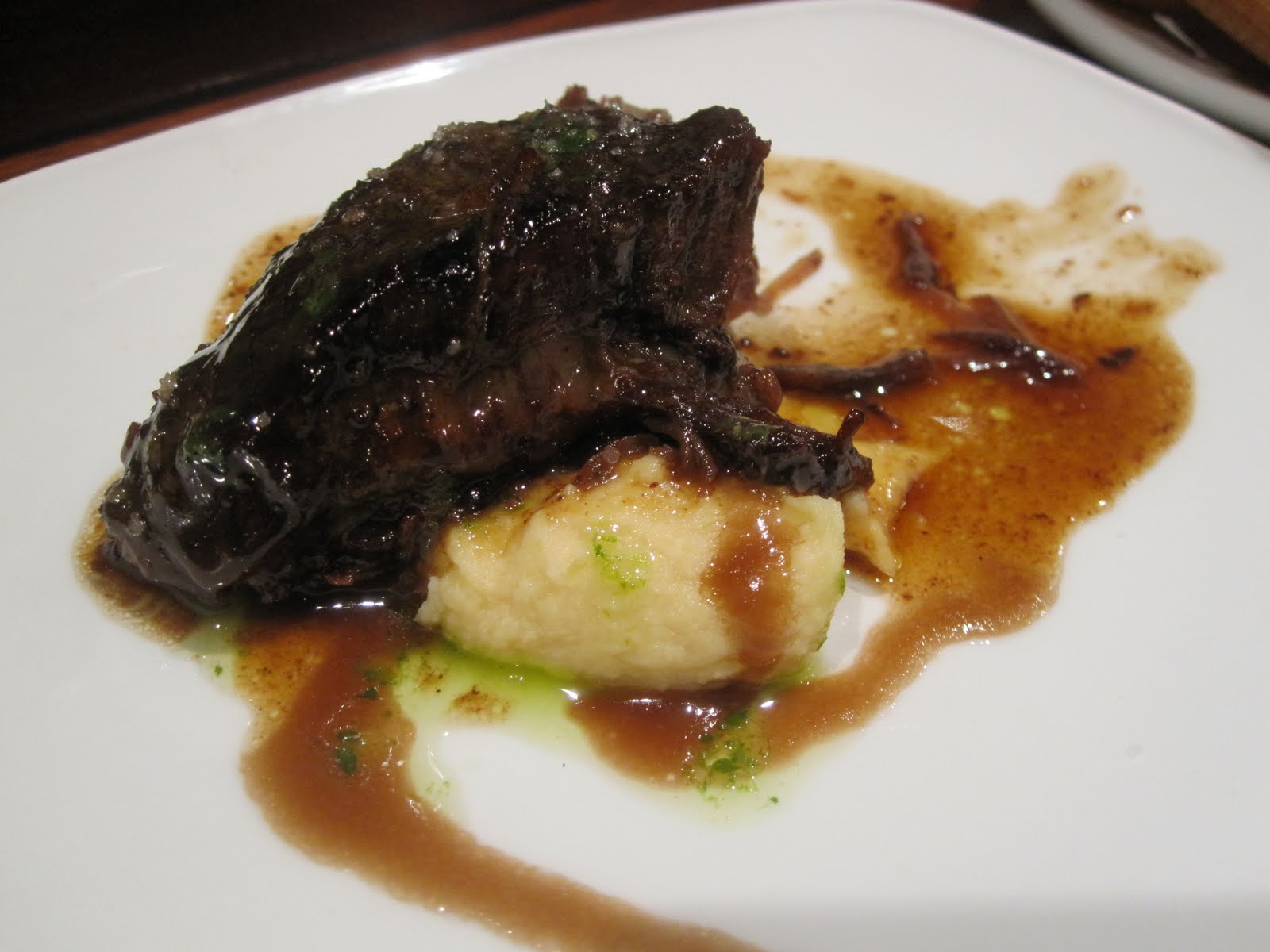
The first time I was in San Sebastian my traveling buddy learned of a locals' favorite, La Cuchara de San Telmo. I remembered the food to be amazing, and wanted to share the experience with my new traveling buddies. We went there first on our pintxo crawl. Bacalao with polenta and salsa verde, orzo risotto with a sharp cheese, pulpo a la plancha with braised cabbage, braised beef cheek over potato, cochinillo asado with apple puree and chimichurri. The compositions were not terribly spectacular or inventive, but the cookery was sublime. Every protein was melt-in-your-mouth tender, well-seasoned, and flavorful. TM's only complaint was that the cochinillo had rubbery skin (read: not as crisp as she's able to make it). But did I mention that every dish was 3-4 euro each?


Our next stop was a A Fuego Negro, a bar well-known for somewhat experimental cuisine. It was an extremely busy Saturday night, so we ordered what was quick and easy for the kitchen (an incidentally, what was advertised on the servers' shirts): kobe beef sliders. The sliders came out raw. Lesley and TM wolfed theirs down, but I couldn't stomach the texture of the mushy, room-temp manipulated meat. The pinxtos on the bar looked okay, but we moved on to a couple of other places including La Vina and La Cepa. Sorry, I was too drunk on rioja and estrella damm at this point to remember to take pictures of these last two!


Over the course of the next few days, we hit on a bunch more pintxo bars. We would start with one or two selections, stay if we liked them, move on if we didn't. Overall, our favorites were Astelena, Bar Goiz Argi, and Bar Nestor.

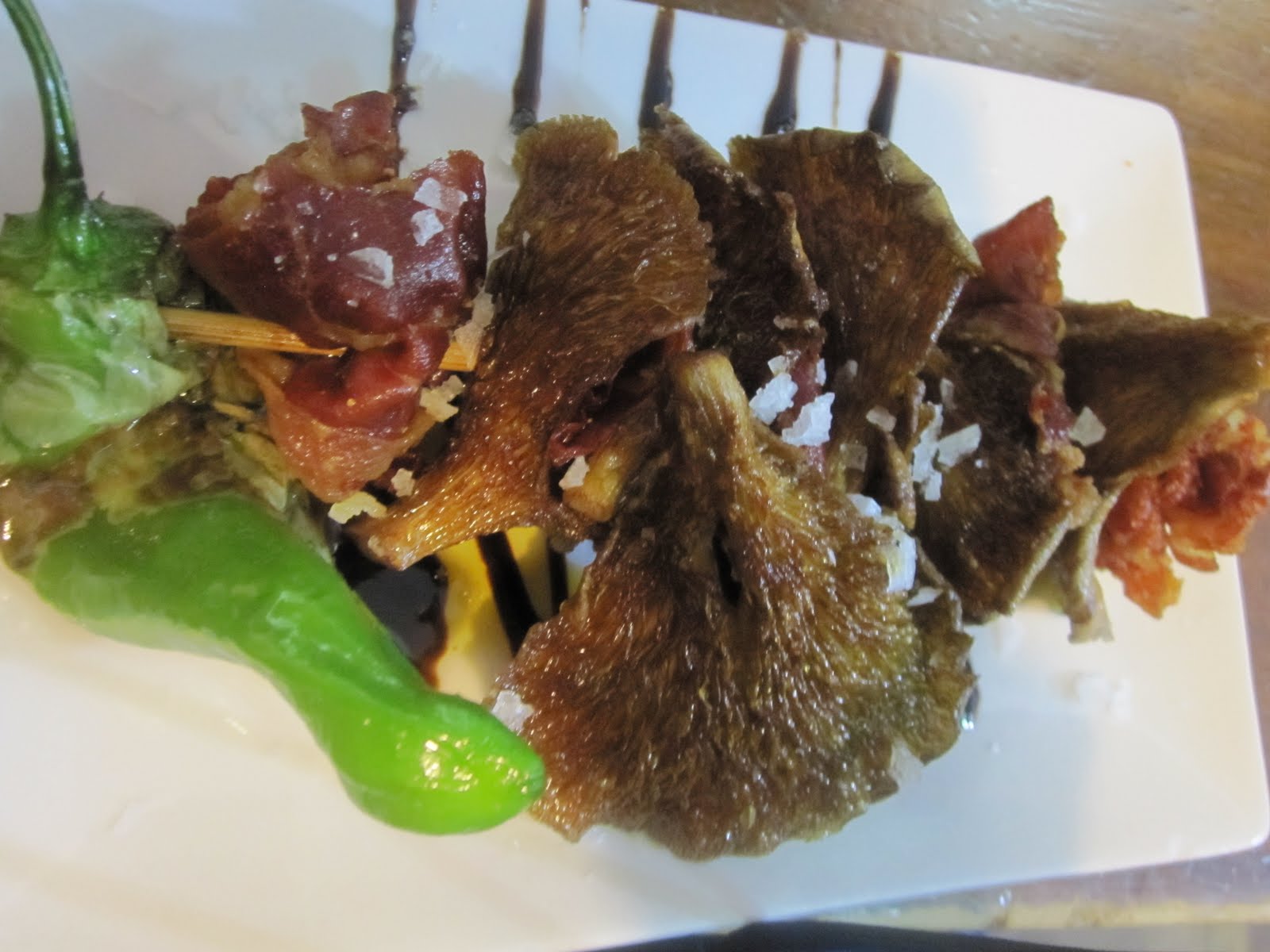
Astelena was interesting because they would display raw ingredients on their pintxo bar, and then take it back to cook when ordered. Were they concerned that people wouldn't order their raciones?? We choose the shrimp and filo, mushrooms w/ jamon and peppers, duck w/ star fruit and currants, and frog legs w/ crema and avocado. Every item was deep fried (perhaps too long) and hence one-note, except for the duck, which was pan-fried.


Bar Goiz Argi was chaos. Small, crowded, too uncomfortably busy to have any kind of serious enjoyment in the experience. Nonetheless, we ordered a handful of things: bacalao in a red pepper sauce, skewered pork, white anchovy with pickled peppers, and calamare a la plancha (not pictured). A bit salty overall, but solid bar food.

We chose Bar Nestor by accident; Bar Zeruko, our original choice, was closed. I remembered the name from someone's recommendation, and when we walked in and saw people hunched over thick, sultry slabs of rib eye steak we knew what we were eating for lunch. The barman showed us two raw steaks to choose from, and we were on our way to complete bliss (and later, heart burn in TM's case). The meat was from the most flavorful, happy animal we had ever encountered. Cooked to a perfect medium-rare, the steak oozed gameyness and matched perfectly with raw tomatoes doused in grassy olive oil and flaked sea salt.

Thursday, October 27, 2011

Madrid!

It has been awhile since we've blogged. Before we get any grief, I'm just going to say a lot has happened and we will share details all in good time! In the meantime, some notes about our recent trip to Spain starting with Madrid...

Getting up at 4am to catch a FlyAway shuttle to LAX so we could catch our 7am flight to Miami, and then a 3 hour layover in the airport followed by a 8.5 hr red-eye flight to Madrid and a 45-min train ride during the morning-rush hour was not exactly the best start to our trip. The beautiful sunrise from our plane window, however, prefaced wonderful things to come.


The first thing we did after dropping off our bags at the hostal was to grab some grub at the local supermarket. I'm sure it was a regular old supermarket to the Spaniards, but to us it was glorious! Row upon row of every variety of cured meats, as far as the eye could see.

We came back with a bounty of jamon, machego, olives (0.59 euros! for a pack), sardines, cornichons, marinated tuna, a fresh baguette (1 euro), and some really fresh sweet grapes. I couldn't (and didn't) wait to dig in. This unadorned supermarket food was better than anything of the sorts we've had in the States.

After an 8-hr nap, we were ready to explore Madrid. We left the hostal around 9pm, just as the Spaniards were getting ready to eat dinner. Since it was a food trip, we more or less made a bee-line for La Latina, Madrid's home of tapas. We walked up and down the entirety of Calle de la Cava Baja before deciding on Taverna Tempranillo, a relatively modern but somehow still divey tapas bar. The tapas we ate were more like pintxos (small bites on bread)

A semi-cured cod with raw tomato and raw pepper, sauteed baby squid with caramelized onions and aioli, duck procuitto with a warm tomato sauce. All on crusty slices of a country loaf, aka Loretta bread! Everything, especially the super-tender perfectly caramelized squid, was punchy and flavorful. We washed everything down with 2 euro glasses of local wines and thanked our lucky stars we were in Spain.

The next morning we rose early to take our daily breakfast of cafe con leche (it's the milk that makes it so delicious!) and tortilla de patata (how does it get so flavorful and dense?) and made our way to Parque del Buen Retiro. Given that our budget was super tight and reserved only for food expenditures, we took our time at this very pretty and very free park.

Deciding that we would partake of supermarket leftovers for dinner, we stopped by the Mercado de San Miguel for a late lunch. This market is reminiscent of Mario Batali's Eataly, but without the ridiculously over-priced food and useless retail section. Instead, we found stall upon stall of prepared foods including oysters, tapas, cheeses, cured meats, wines, croquettes, breads, and sweets.

Each stall had its specialty and we chose a few samplings, including seared pimientos de Padron with sea salt, olives with anchovy and pickled peppers, Spanish oysters, cured salmon over a fried green tomato, and marinated seafood (mostly mussels) with pickled peppers and onions. Yum, yum, and yum again. Who would have guessed that there is such good seafood in the landlocked Madrid?!

Monday, June 27, 2011

Food Snob

My palate has changed. I used to be able to enjoy your everyday, run of the mill foods like Little Cesar's Pizza or Trader Joe's produce. Not even the popular restaurants in LA satisfy me anymore....what's happened to me??? My palate has become this insatiable, snobby, princess that only wants the finest and freshest. Fortunately, I live in Los Angeles where there is a farmers market everyday of the week. But what about the rest of my food that can't be bought at farmers markets? Why can't my palate be ok with Foster Farms chicken or the Ralph's meat or seafood counter? The truth is, I've spoiled my palate at home. Loretta and I exclusively shop at farmers markets for our produce, we buy fish from the wholesale fish market in Little Tokyo that supplies the best sushi joints in town and of course our love affair with our local butcher at McCalls. We bake our own organic bread, grow our own herbs, tomatoes and peppers and travel to Pasadena to Jones' every time we need to stock up on coffee. It's not much more expensive than blowing all of our money at the supermarkets. In fact, the produce is cheaper, the meat lasts longer and we have peace of mind knowing that we are eating as seasonal, local and healthy as possible, supporting the local economy and our princess palates are satisfied.

Lately, more than usual I've been called a "food snob". I think I will go ahead and embrace the title...what's so bad about caring for food and caring about where my food is coming from? Without food snobs there would be no progression in the food industry...right? We'd just settle for the same thoughtless, low quality foods from god knows where. You know, I wish there were more food snobs. Maybe I will evangelize my food snobbery...make some believers, attract some followers...lots of followers....paying followers who demand quality and go out and spread the word! We will support our local farmers, butchers, and fishermen! We'll give a damn! Because to all those who want to call me names....the truth is I just give a damn.

Saturday, June 25, 2011

LA Fish Co

I love going to the market, especially markets that specialize and price fairly. Last year, we found one such market: the LA Fish Co in Little Tokyo. This is one of the wholesale markets in LA that supply the many sushi restaurants in the city. Unlike the others, however, this one is also open to the public. Though they encourage customers to buy whole fish, they are flexible enough to sell sides, or 1 lb portions of sushi-grade tuna loin, perfect for experimenting restaurateurs!

Because of its large Japanese restaurant client base, this particular market flies in a lot of Japanese specialties daily. And, because discerning chefs contribute to most of this market's business, most of the product is extremely fresh, fresher than anything you'll find in even the best supermarkets. Parrot fish and New Zealand snapper were two crystal-eyed options this last week.

In addition to their Japanese specialties, the LA Fish Co also sells seasonal fish. It was exciting to see whole, super-fresh white seabass, black cod, and halibut. I've never broken down halibut, but it looks a little daunting to me, perhaps because of those two eyes slightly off-kilter on the same side of the animal.


Perhaps most exciting of all were these spiny animals, called sculpin, or cabraco in Spanish. According to some makers of Spanish bouillabaisse, the head of the skulpin is necessary for the fish stock. As a serious fan of good bouillabaisse, I've determined to make one for my fish station. What it will go on is tbd. Can't wait to pick a couple of these monsters up this week.

100 Years on Broadway

As part of the Bringing Back Broadway initiative, the Palace Theatre opened its doors after a recent renovation to showcase a history of Broadway as the former entertainment and commercial capital of Los Angeles. Incidentally, this summer marks the 100th anniversary of the Palace, which opened in 1911 for vaudeville and eventually, film.

From 1910 to 1931, 12 theaters were built on Broadway from 3rd to 9th Streets. They served as music halls, vaudeville and movie theaters, and even a "legitimate" dramatic theater. Many of them were extravagant and ornate, and each tried to trump previously built theaters in detail, seating capacity, or sheer height. The entryway to the Palace characterized the sometimes European castle, sometimes fairytale, sometimes gothic architectural tastes of the period.


I especially enjoyed the lighting underneath the balcony. The light bulbs had carbon filaments, which created a charming and romantic feel as you sat underneath them in the orchestra. The detail on the glass wasn't lost on me either.


In the hundred years since theaters started going up on Broadway, most of the theaters had been shut down at one point or another due to financial issues. Movie theaters were especially hard hit after WWII when city residents started relocating to suburbs and legislation separated ownership of movie studios and movie theaters. As the theaters struggled in their independence, many came to rely on Spanish-language films to help fill their seats. Broadway soon became a vivid entertainment center with restaurants, shopping areas, and movie places for the immigrant community.

As Broadway enters a new phase of revitalization, it is clear that Broadway is drifting away from its swap-meet, bridal shop, food stall identity and towards the general gentrification taking over Downtown LA. What sets Broadway apart, however, is the pervasive desire to cling to its historical roots. Whether these roots will manifest in a robust (English or Spanish-speaking) entertainment district, art center, food hub, or all of the above is yet to be determined. After learning a brief history of the area today, I'm just super excited that Raciรณn gets to be part of whatever it decides to be.

Saturday, June 18, 2011

Our best tasting yet.

A couple of days ago, we had some friends over for TM's best tasting ever. It was made even better because all I had to help with was the bread! My starter, which has been going for several months, is in a good place so the bread turned out well, even though it was slightly over-risen because of the drama with the pig (story to follow).

I had to pick up the pig from the butcher, which was terrifying for me as anyone who has heard my Bouley hazing story knows. Suffice it to say, seven years of avoiding contact with meat as a vegetarian ended at the ears of a suckling pig, whose head (complete with cigarette in mouth) was stuffed onto a shelf on my low-boy refrigerator by some very mischievous line cooks during my first few weeks in the kitchen. The suckling pig I picked up on Wednesday was a three hour ordeal because I had to gather the courage to touch what looked like the Bouley pig's long lost body.


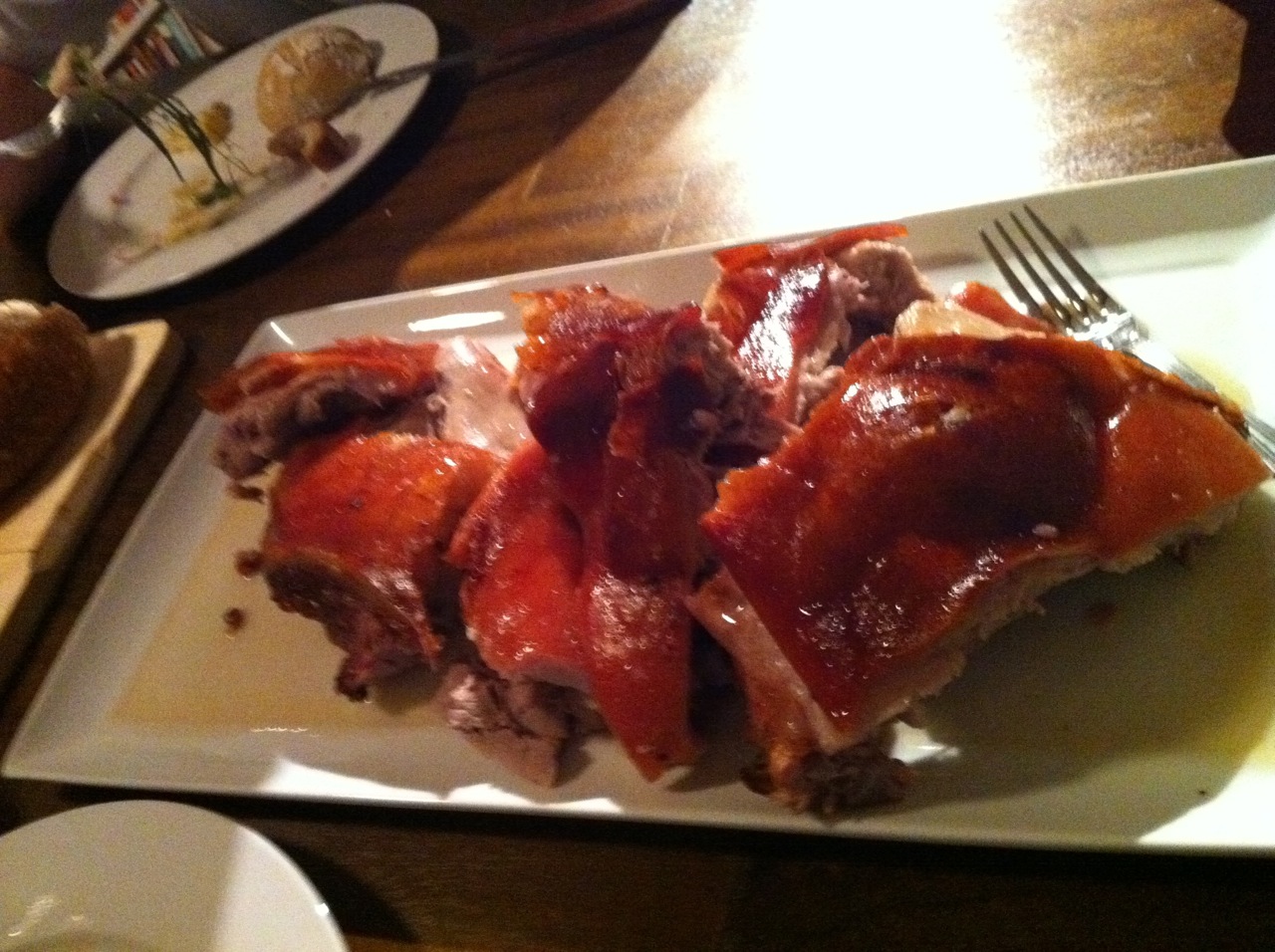
TM prepared the pig very simply: upside down to start with EVOO, sliced onions, salt and pepper, and a couple cups of water. Presumably, the skin won't stick to the bottom of the pan with the water. And, you start the pig upside down because the skin gets crispy faster than the meat cooks so you only want to flip it about half-way through. The finished product was indeed quite beautiful:


Here's a close-up of that beautiful crisp, astonishing for an old crappy home oven:


The pig was served with its roasting juices, which was a concentrated version of itself: clean flavors, slightly gamey, very robust. I could only eat a piece because of my earlier trauma, but I'm pretty sure our guests were blown away. For me, the star attraction of the night was a lamb carpaccio with poached blueberries, marinated goat cheese, and an almond olive crumble. Not only was it a beautiful presentation, but the flavors were playful and had tremendous range, a combination of sweet, sour, savory, briney. Basically, all the flavors that are pleasant in this world. I could have done with more lamb since the lamb we got (thanks, McCall's!) was so mild, but all-in-all an stellar dish.

Our final dish was a marinated seafood dish with tuna, white anchovy, calamari, Spanish olives, and pickled radishes. We found these beautiful olives from a gourmet food stand at the Atwater Farmers' Market called Christina's From Spain. The olives were from a small artisanal farmer in the La Mancha region of Spain, an up-and-coming region for wine as well! The fish we got from LA Fish Company in Little Tokyo, our go-to fishmonger.


We didn't serve dessert at this tasting, but our guests dug into some beautiful stone fruits we picked up from the farmers' market. It was a perfect end to a meal where we really let the ingredients drive the recipes. Our philosophy moving forward: spend less time cooking and more time eating.

Thanks for the photos, Tim!

Tuesday, June 14, 2011

Our first contractor meeting


So. We finally met with a contractor at our proposed spot in the Eastern Columbia today. Perhaps we should have done it sooner so that we have a more accurate idea of what our costs will be. I suppose we could have done it to have another opinion on the build-out process. Regardless. We met with a contractor today. And, we liked him! He came as a recommendation from our friend Bryant, who just launched a restaurant. Though Bryant didn't use Triple Five in his own build-out, he recommended that we reach out to Triple Five first. Interesting.

We wanted to meet at the space to see if he could identify any issues. Unexpectedly, he offered to review the lease (we've had two lawyers look it over already, but this is the sort of thing that needs lots of eyes). He also gave us a ballpark range for build-out. Granted, the spread was $160k. At least we have a better idea now for what we need to raise. We also feel more confident that we know the general process for launch, i.e. time-line, permitting, people to involve, etc.

We then followed up our meeting with lunch with our friend, who is starting a bakery down the street. She decided not to use a general contractor. She's using a project manager instead so she can save a bit of money. I'll need to explore this idea, and the idea of using an expeditor/engineer instead of an architect, but my initial sense is that we might save some headache with a contractor. As with all things, however, our options will be determined with a better idea of our cash situation. So. As with all things thus far, we wait for new developments. Stay posted.